
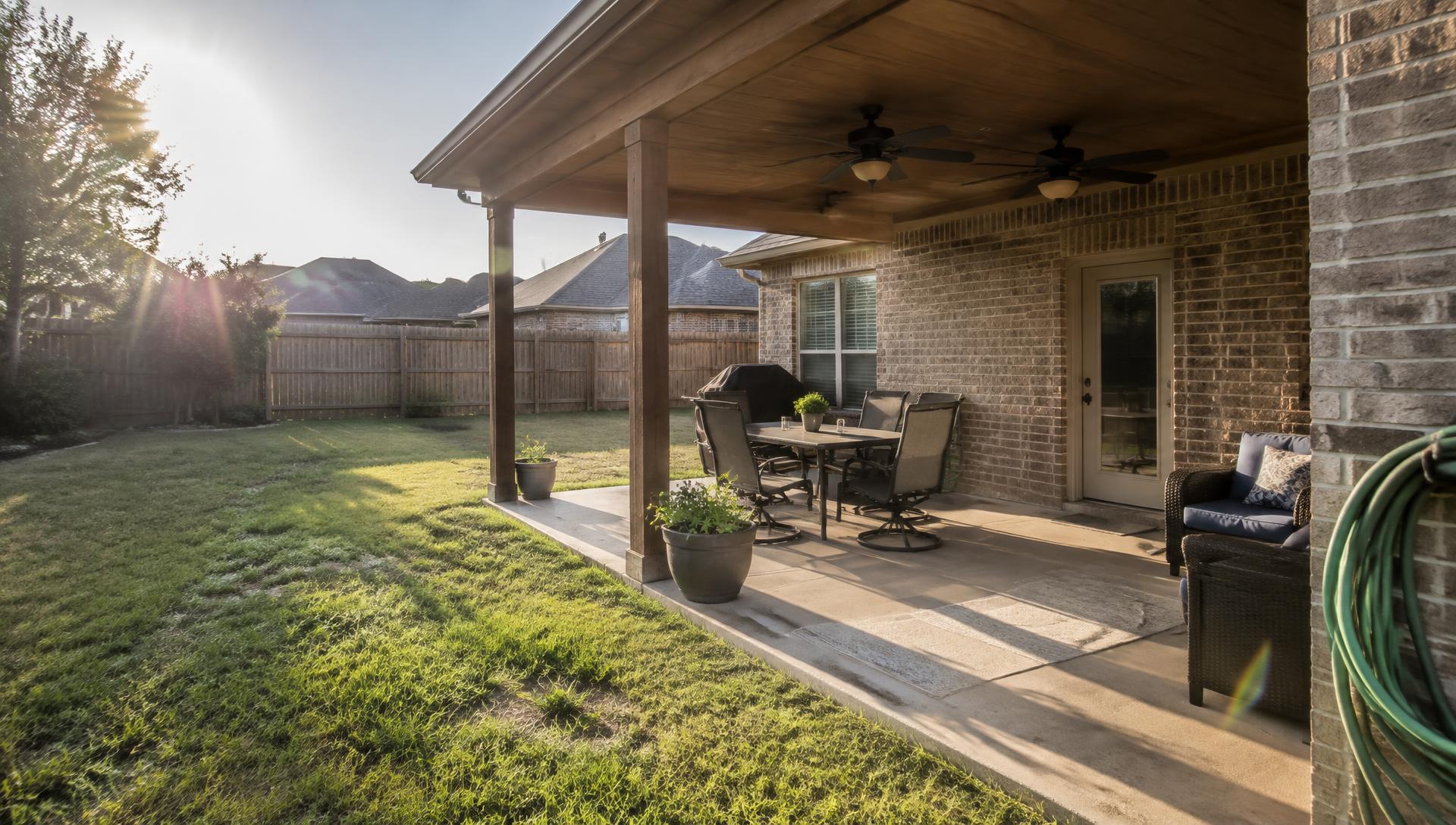
A patio cover should make your backyard easier to enjoy, not leave you wondering whether every stain or rattle means trouble. In Abilene, dust, blowing debris, and occasional severe weather make a simple maintenance routine especially useful.
We design and build patio covers, and we encourage homeowners to think about upkeep from the beginning. Accessible drainage, suitable finishes, and clear product care instructions can make ownership more straightforward. Whether your cover is new or has been part of your home for a while, this checklist can help you decide what needs cleaning, what deserves monitoring, and what calls for professional attention.
Start with a safe ground-level inspection
Before you pick up a hose or cleaning product, walk around your covered patio. Look at it from several angles, including from the yard and beneath the roof. Taking photos from the same locations each season makes changes easier to spot.
Check for:
- New stains on the ceiling, beams, or posts.
- Bent panels, shifted trim, or visibly loose components.
- Peeling finishes, exposed wood, or rust-colored streaks.
- Debris collecting along roof edges and drainage outlets.
- Changes in the position of posts or connections.
Do not climb onto a patio cover to inspect it. Some roof systems are not designed to support foot traffic, and damage may not be visible from above. If you see sagging, movement, or a partially detached panel, keep people away from the affected area and arrange an evaluation.
Spring: Clear debris and check drainage
Spring is a useful time to clear out accumulated debris and look for drainage problems before you spend more time outdoors. Leaves, twigs, and dust can collect where panels meet, near flashing, or in gutters if your cover has them.
From a safe position, check that visible drainage outlets are open. During an ordinary rain, observe whether water flows toward the intended outlets or spills over an edge. You do not need to stand outside during lightning or severe weather to investigate a leak.
Look for recurring wet spots after rain. A stain near a wall connection may involve flashing, while dripping farther out could involve a panel joint or fastener. The visible drip does not always identify where water entered.
We recommend documenting the location and timing rather than applying sealant everywhere. Indiscriminate caulking can block intended drainage paths and make the original problem harder to diagnose.
Summer: Clean gently and inspect finishes
Dust and pollen can make a patio cover look tired even when its structure is sound. Start with the cleaning instructions for your specific roof panels, coatings, and ceiling materials.
For many finished surfaces, gentle cleaning with a soft cloth or brush and an approved mild cleaner is appropriate. Test an inconspicuous area first, and avoid cleaning products that are incompatible with the finish.
Keep these precautions in mind:
- Clean when surfaces are cool rather than hot to the touch.
- Avoid abrasive pads that can scratch protective coatings.
- Do not force water upward into seams, vents, or electrical components.
- Avoid pressure washing unless the manufacturer specifically permits it.
- Keep cleaning runoff from sitting against post bases or hardware.
While cleaning, look for finish changes. Fading is different from peeling, and surface dirt is different from corrosion. If cleaning does not remove a mark, identify the cause before scrubbing harder or applying a new coating.
Fall: Check connections and moisture trouble spots
Before cooler weather arrives, take another look at the places where materials connect. Post bases, beam connections, exposed fasteners, and panel edges deserve attention because small changes can be easier to see there.
Watch for gaps that were not present before, hardware that appears to be backing out, and moisture lingering around post bases. Keep stored items from hiding these areas so you can inspect them easily.
Do not assume every visible fastener should simply be tightened. Some roof systems allow movement as temperatures change, and overtightening certain screws can damage washers or distort panels. We recommend leaving connection adjustments to someone familiar with the construction and product requirements.
This is also a good time to review any hanging accessories. Do not add swings, heavy planters, or other substantial loads to a beam without confirming that the structure and attachment points were designed for them.
After hail or a strong storm: Look for changes
A seasonal schedule is helpful, but a significant storm warrants an extra check once conditions are safe. Compare what you see with your earlier photos.
Look for new dents, punctures, cracked translucent panels, displaced trim, and debris lodged against the roof. Underneath, check for fresh water marks and unusual gaps. A new rattle can also indicate that something needs evaluation, even if the source is not obvious.
A dent alone does not tell you whether a cover is leaking or structurally compromised. The material, location, and extent of the damage matter. Likewise, an undamaged-looking surface does not rule out a problem at a connection.
If water has reached lights, fans, or wiring, stop using the affected equipment and have the electrical concern evaluated by a qualified professional. Avoid touching wet components or attempting to investigate them yourself.
Match upkeep to your patio cover materials
There is no single maintenance schedule that fits every patio cover. Product instructions, exposure, and the condition of existing finishes should guide your approach.
- Wood components: Watch for peeling coatings, persistent dark staining, soft areas, and changes in cracks or splits. Wood can develop surface checking naturally, but widening cracks near connections deserve closer attention. Recoating depends on the finish and its condition, not a universal calendar.
- Metal components: Look for scratched coatings, corrosion, loose trim, and deterioration around fasteners. Use only compatible cleaners and touch-up products. Do not substitute random screws or sealants for specified components.
- Insulated roof panels: Inspect accessible seams, trim, and exposed edges without removing caps or puncturing the surface. Follow the panel manufacturer's care requirements.
- Translucent roof panels: Check for cracks, discoloration, and debris buildup. Cleaner compatibility is especially important because some chemicals can damage these materials.
If you are planning a replacement or a new cover, our patio covers page is a starting point for discussing a design that fits your space and maintenance preferences.
Frequently asked questions
How often should we inspect our patio cover in Abilene? We suggest a ground-level check each season and another after significant storms. Follow any additional inspection or care guidance provided for your specific materials.
Can we pressure wash a patio cover? Only if the product manufacturer allows it and you can follow its requirements safely. High pressure can damage coatings, force water into joints, and harm softer materials. Gentle cleaning is generally the better starting point.
Does a leaking patio cover need to be replaced? Not necessarily. A leak may involve a localized joint, flashing detail, or damaged component. The right next step is an evaluation of the cause and overall condition rather than assuming either a quick sealant fix or complete replacement will solve it.
If you are ready for a new patio cover designed and built for your Abilene home, we invite you to request a quote from Abilene Outdoor Living.