
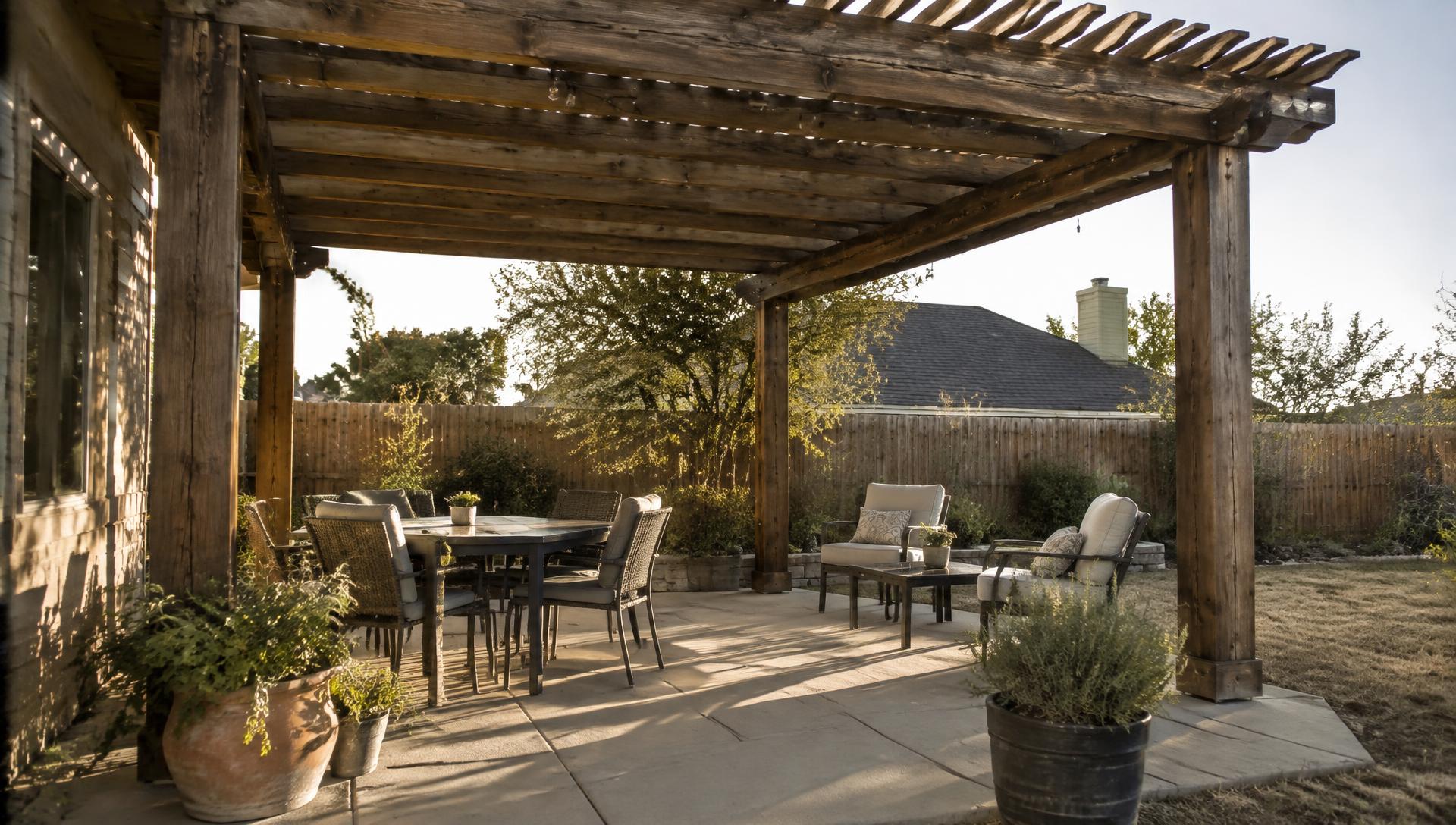
A pergola’s open roof gives a patio definition without completely closing off the sky. But that open structure also creates a common planning question: How much shade will it actually provide? In Abilene, the answer matters most during the hours when you want to sit outside, share a meal, or unwind after work.
We encourage homeowners to think beyond how a pergola looks in a photo. Slat spacing, slat depth, orientation, and the sun’s position all affect where the shadows fall. Here’s how we approach those choices so a pergola’s shade matches the way you use your patio.
Start with the hours you want to spend outside
Before choosing an overhead pattern, identify your priority hours. A breakfast spot, a lunchtime dining area, and an evening seating area have different shade needs.
On a clear day, check your patio in the morning, around midday, and late in the afternoon. Note which seats get direct sunlight and which areas already receive shade from the house. Photos taken from the same spot can help you compare conditions.
We recommend writing down three things:
- The hours when you most often use the patio.
- The specific seats or tabletop areas you want shaded.
- Whether you prefer filtered light or more continuous shade.
Plan around people, not just pavement. Shade on an unused corner does little for comfort if the dining chairs remain in direct sun. Also note the season when you make your observations; winter shadows will not show exactly what happens in summer.
Understand what an open pergola can deliver
A traditional pergola uses spaced overhead members rather than a continuous roof. Those members cast bands of shade that move as the sun travels across the sky. Depending on the design and time of day, the result can range from a lightly filtered effect to substantial shade over a particular area.
That does not make an open pergola a rainproof structure. Adding more slats may reduce direct sunlight, but gaps still allow rain through. Small overhead gaps also should not be treated as reliable hail protection.
We separate these goals early in planning:
- Filtered sunlight: An open overhead pattern may be a good fit.
- More continuous shade: A denser pattern or suitable shade component may help.
- Dependable rain protection: A patio cover or covered patio may better match the goal.
This distinction helps us design toward the comfort you want without promising performance an open structure cannot provide.
How slat spacing changes the shade
Closer spacing generally blocks more direct sunlight than wider spacing when the other design conditions remain the same. It also changes the appearance of the pergola, making the overhead pattern feel more enclosed.
However, spacing alone does not tell the whole story. The width and depth of each slat matter too. A deeper member can cast a longer shadow when sunlight strikes it at an angle, while the same member may create a narrower shadow when the sun is high.
For that reason, we would not choose a gap dimension in isolation. We consider the whole overhead arrangement: member dimensions, spacing, direction, and height above the seating area.
There is also a visual tradeoff. A dense pattern may provide welcome shade but reduce the open-sky feeling that drew you to a pergola. The right balance depends on whether your priority is a bright, airy setting or stronger midday sun control.
Why slat direction needs a site-specific answer
Homeowners often ask whether pergola slats should run north–south or east–west. There is no single orientation that provides the best shade for every patio and every hour.
The useful question is: How will sunlight cross these slats during our priority hours? When sunlight crosses the members at an angle, their depth can help block it. When sunlight aligns more closely with the openings, more light may pass through.
We consider the property’s orientation along with the intended seating location. The decorative direction that looks best from the back door may not deliver the strongest shade during dinner.
Ask to review the expected shade pattern for the times that matter to you. A plan should make the relationship between the overhead members and the sun understandable, rather than relying on a blanket claim that one direction always works.
Why evening sun can miss the overhead shade
Late-afternoon sunlight presents a different challenge from overhead midday sun. As the sun drops, it can reach beneath the pergola’s edge and shine directly onto people sitting inside.
Simply tightening the overhead slat spacing may not solve that problem. The pergola can cast a strong shadow while that shadow falls beyond the chairs you want to protect.
Depending on the site, we may discuss shifting seating within the shaded area or incorporating an appropriate side-shade component into the pergola design. A side screen needs to be evaluated as part of the structure, not treated as a harmless accessory. It can change wind exposure and the demands on connections.
The goal is to address the direction the sunlight actually comes from, rather than adding overhead material that does little during your preferred hours.
Plan added shade before construction
If you expect to want fabric shade, adjustable overhead components, or a denser slat pattern, bring that up before the pergola is built. These choices can affect structural loading, attachment details, maintenance access, and appearance.
In West Texas, added fabric or panels also need careful consideration for wind. We would not assume an existing pergola can accept a new shade component without evaluating the structure and the component’s requirements.
For removable or retractable products, understand the operating instructions before selecting them. Some require retraction or removal during certain weather conditions. Ask how accessible the controls and attachment points will be, and what routine cleaning involves.
If the design includes a roof-like addition, confirm applicable permit and HOA requirements before proceeding. Requirements can vary with the property and proposed work; an open pergola and a roofed structure should not automatically be treated as equivalent.
Frequently asked questions
Can a pergola provide full shade all day? A typical open-slat pergola does not provide continuous shade everywhere beneath it all day. We can plan for stronger shade during your priority hours, but moving sunlight and low-angle exposure still matter. If continuous overhead coverage is essential, we can discuss whether a patio cover better suits your needs.
Will adding more slats make my existing pergola shadier? It may reduce direct sunlight, but the improvement depends on the sun angle, slat dimensions, and direction. Additional members also add weight and can change wind loading. We recommend evaluating the existing structure before making changes.
Can we keep a pergola airy while improving afternoon shade? Often, the best approach is to target the problem hours rather than make the entire overhead pattern denser. We look at the sunlight’s direction, seating placement, and suitable shade components to find a practical balance between openness and comfort.
Build shade around your routine
At Abilene Outdoor Living, we design and build pergolas directly. We start with how you want to use the space, then work through the overhead details that influence real-world shade. You can explore our pergola design and construction services to learn more.
Request a quote from Abilene Outdoor Living for a pergola planned around your patio and the hours you enjoy it most.