
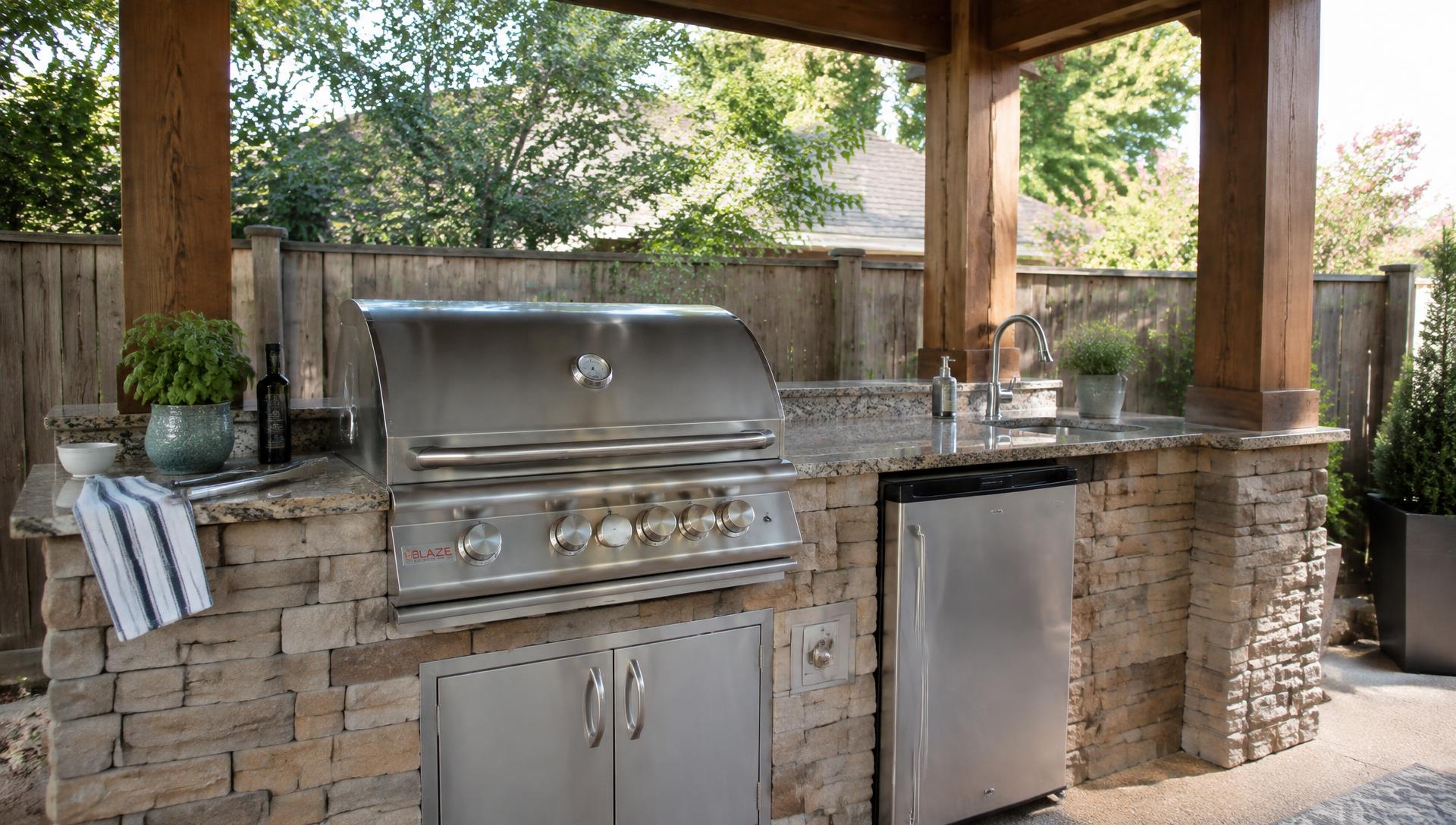
Freezing weather can catch an outdoor kitchen owner off guard, especially after a stretch of comfortable afternoons. A closed cabinet does not necessarily protect a water line, and a covered patio does not keep an outdoor refrigerator within its approved operating temperature range.
At Abilene Outdoor Living, we design and build outdoor kitchens directly. We encourage homeowners to think about cold-weather protection before the first freeze, whether they cook outside year-round or close the kitchen for the season. Here is how we recommend approaching winterization in Abilene without overlooking the parts you cannot easily see.
Start with your equipment manuals and water connections
Outdoor kitchens vary enough that there is no single shutdown procedure for every setup. A kitchen with a grill and storage cabinets needs less preparation than one with a sink, refrigerator, ice maker, and multiple water connections.
Before cold weather arrives, gather the care instructions for each appliance and identify the kitchen’s utility shutoffs. Do not assume a valve under the sink isolates every outdoor water line.
We suggest making a short checklist:
- Locate the dedicated outdoor kitchen water shutoff, if installed.
- Identify exposed supply lines, faucets, filters, and appliance connections.
- Check refrigerator and ice maker minimum operating temperatures.
- Find manufacturer instructions for seasonal shutdown and storage.
- Note cracked sealant, leaks, or drainage problems that need attention.
If you cannot determine how a water line drains, have the setup evaluated before freezing weather. Guessing can leave water trapped where it is most vulnerable.
Protect the sink and water supply first
Water left inside pipes, valves, and appliance components can freeze and cause damage. Pipe insulation can reduce exposure, but insulation alone does not guarantee freeze protection, particularly during sustained cold.
For a seasonal shutdown, an appropriate procedure generally includes isolating the outdoor supply and draining the portions designed to drain. The exact steps depend on the plumbing arrangement. Opening a faucet does not prove that every low spot, valve, or branch line is empty.
We recommend having a qualified plumbing professional establish the winterization procedure if the system is unfamiliar or lacks accessible shutoff and drain points. Avoid attempting a compressed-air blowout without equipment-specific instructions and professional guidance; excessive pressure can damage components.
Remember the sink drain, too. A drain trap holds water by design. It should not simply be disconnected or left open, which can allow sewer gases into the area. Ask what freeze protection is appropriate for your drain configuration. Never pour automotive antifreeze into a sink or water system.
Disconnect removable hoses and accessories where the manufacturer directs, and store them after draining. Treat water filters and ice makers as separate winterization items rather than assuming the sink procedure covers everything.
Check whether your refrigerator can stay on
An outdoor-rated refrigerator is built for specified outdoor conditions, not necessarily every temperature Abilene might experience. Its manual should identify the approved ambient temperature range and any cold-weather shutdown requirements.
Operating below that range can affect performance. Do not assume the appliance will maintain safe food temperatures just because the surrounding air feels cold.
If the manufacturer calls for seasonal shutdown, the process commonly involves:
- Removing food, beverages, and ice.
- Turning off and disconnecting power as directed.
- Cleaning the interior with approved products.
- Drying accessible surfaces thoroughly.
- Following instructions for ventilation during storage.
Do not leave doors unsecured where children could access the appliance. If a door needs to remain slightly open during storage, follow the manufacturer’s safety provisions.
Built-in ice makers and refrigerator water dispensers may require additional draining or service. Simply unplugging them does not remove water from their internal components.
Clean the grill before covering it
Winter preparation is a good opportunity to remove grease and cooking residue. A dirty grill stored under a cover can develop odors, attract pests, and become harder to clean when you are ready to cook again.
Once the grill is completely cool, clean the grates, grease collection areas, and other accessible components according to its instructions. Check burner openings for debris without enlarging them or modifying any parts.
For gas equipment, follow the manufacturer’s shutdown directions. Do not disconnect or alter fixed gas piping yourself. If a portable propane cylinder must be removed for storage, keep it upright outdoors in an approved, well-ventilated location—not inside the house, garage, or enclosed kitchen cabinetry.
Never cover a warm grill. Use a properly fitted cover after the equipment is cool, clean, and dry. Secure it against wind without blocking ventilation openings that must remain clear.
Keep moisture off countertops and out of cabinets
Cold-weather care is not limited to plumbing. Water can enter damaged joints or porous surfaces, and freezing can worsen existing deterioration. Before winter, check countertop seams, exposed edges, and joints around sinks and appliances.
We recommend repairing failed sealant with a product compatible with the surface and application. For stone or other materials that require sealing, follow the supplier’s maintenance schedule rather than applying a generic sealer to every surface.
For routine preparation:
- Remove food, paper goods, and moisture-sensitive supplies from cabinets.
- Clean spills with products approved for the countertop finish.
- Dry cabinet interiors and check for water entry.
- Keep cabinet ventilation and drainage openings unobstructed.
- Remove standing water from accessible surfaces.
Avoid abrasive tools when clearing ice. Do not use deicing chemicals on countertops unless the surface manufacturer specifically approves them.
Use covers without trapping dampness
A covered patio helps reduce direct exposure, but wind-driven precipitation can still reach an outdoor kitchen. Overhead protection also does not prevent freezing temperatures.
Choose appliance covers intended for the equipment rather than tightly wrapping the entire kitchen in plastic. An impermeable wrap can trap condensation, especially as temperatures rise and fall.
After wet weather, check beneath covers when conditions allow. Let damp surfaces dry before covering them again. Also inspect cover straps and attachment points after strong winds so loose fabric does not repeatedly rub against finished surfaces.
Plan for easier winter care when building
If you are considering a new kitchen, winter maintenance belongs in the design conversation. We discuss access to shutoffs, service panels, appliance ventilation, and water connections so essential maintenance points are not buried behind permanent finishes.
For homeowners who cook outdoors only occasionally, a simpler appliance setup may reduce seasonal maintenance. A sink or ice maker can be convenient, but each adds components that need cold-weather attention.
Explore our outdoor kitchens to start thinking about a kitchen that fits both your cooking habits and your willingness to maintain it.
Frequently asked questions
Does a covered outdoor kitchen need winterization in Abilene? Yes, if it includes freeze-sensitive plumbing or appliances. We recommend treating overhead coverage as protection from some precipitation, not as temperature control.
Can we keep using our outdoor kitchen during winter? Often, yes, within each appliance’s operating limits and with appropriate utility protection. We recommend keeping required ventilation clear and never enclosing a cooking area with temporary coverings that could trap combustion gases.
Is leaving the outdoor faucet dripping enough? We would not treat dripping as a complete winterization plan. It does not protect every appliance, branch line, or drain component. Use a procedure suited to your particular plumbing system.
For an outdoor kitchen designed around your Abilene home and year-round maintenance needs, request a quote from Abilene Outdoor Living.