
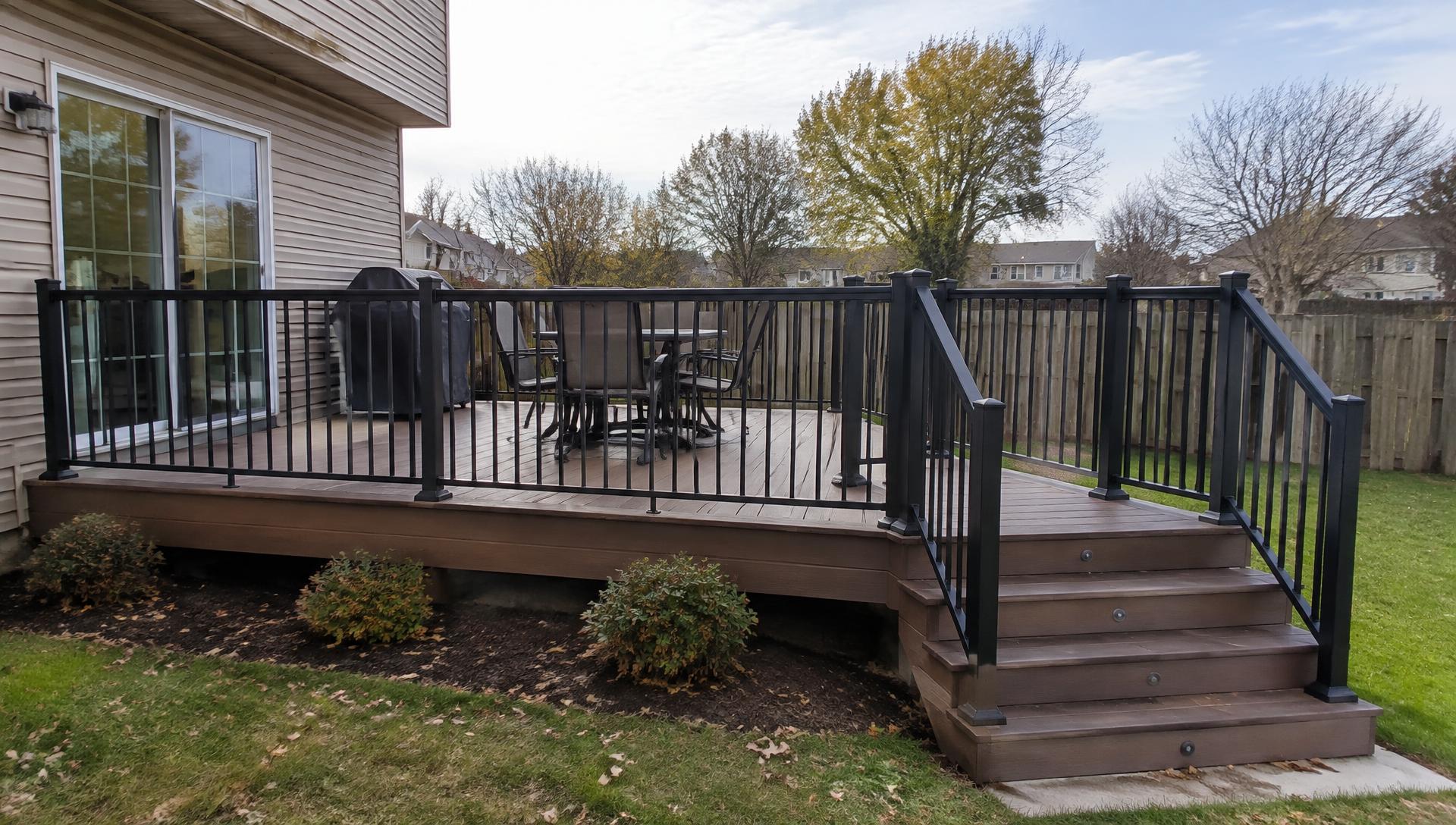
Choosing decking is about more than picking a color. In Abilene, a deck may face intense afternoon sun, windblown dust, and sudden storms. The right material should fit those conditions while matching how you want to use your outdoor space.
We design and build decks directly, and we encourage homeowners to compare wood and composite as complete systems—not just boards. Framing, fasteners, drainage, and installation details matter alongside the walking surface. Here is how we recommend working through the choice.
Start with how you will use your deck
Before comparing materials, think about an ordinary day outside. Will you step onto the deck barefoot? Eat dinner there? Move chairs around frequently? Those habits help identify which trade-offs matter most.
We suggest answering these questions first:
- When does the deck receive direct sun, especially in the afternoon?
- Will children or pets regularly use the surface?
- How much cleaning and refinishing are you willing to handle?
- Do you prefer natural wood grain or a more consistent appearance?
- Will the deck connect to an existing doorway, stairs, or covered area?
A sunny deck used barefoot calls for a different conversation than a shaded deck mostly used with shoes on. Neither wood nor composite is automatically the best answer for every backyard.
Wood decking: natural character with ongoing upkeep
Wood appeals to homeowners who want real grain and natural variation. Depending on the product, options may include pressure-treated lumber or naturally decay-resistant species. Each has its own appearance, care requirements, and installation considerations.
Wood is a good option to consider if you value its natural appearance and accept periodic maintenance. It can generally be refinished, giving you a way to refresh a weathered surface. Individual boards can also be replaced, although newer boards may initially look different from older ones.
The trade-off is exposure-related change. Wood can fade, check, splinter, or move as its moisture content changes. Appropriate installation and maintenance help manage those issues, but they do not eliminate the material's natural behavior.
For an Abilene deck, we recommend planning for regular inspections, cleaning, and refinishing when the surface condition and finish manufacturer's guidance call for it. Avoid assuming that every wood deck needs the same treatment on the same schedule.
Composite decking: less refinishing, but not no maintenance
Composite decking typically combines wood fibers with plastic, and many products have a protective outer cap. Product construction varies, so comparing specific boards is more useful than treating all composite decking as identical.
Composite usually avoids the routine staining or sealing associated with wood. That can appeal to homeowners who want a more consistent appearance without regularly renewing a finish.
However, low maintenance does not mean maintenance-free. Dust, spills, and debris still need attention. Surface texture, board profile, and manufacturer-approved cleaning methods all affect everyday care.
Composite can also scratch or stain, and repair options differ from wood. Sanding or applying a coating may damage the surface or conflict with product instructions. Before choosing a board, consider how furniture feet, food spills, and frequent foot traffic will interact with it.
Which decking gets hotter in Abilene sun?
Both wood and composite can become uncomfortable under direct summer sun. Color, product formulation, exposure, and airflow all influence surface temperature. Darker boards generally absorb more solar energy, but color alone cannot tell you exactly how two products will feel.
We recommend comparing actual samples rather than relying only on photos or showroom lighting:
- Place samples in the area where you plan to build.
- Compare them during the hours you expect to use the deck.
- Include lighter colors and different surface textures.
- Check cautiously rather than stepping barefoot onto a potentially hot sample.
This is a practical comparison, not a guarantee of future temperatures. Samples may behave differently from a completed deck.
If barefoot comfort is a priority, discuss shade early. A patio cover or pergola may be part of the design, though a pergola's shade varies with its configuration and the sun's position. Decking choice alone cannot solve every heat concern.
Durability depends on more than the boards
A premium walking surface cannot compensate for poor support or trapped moisture. We look at the deck's height, access, framing, ventilation, and drainage before narrowing down materials.
Wood and composite also have different fastening and spacing requirements. Composite products may require particular joist spacing, board-end gaps, and fastening methods. Wood installation must account for the selected lumber and its condition. Stairs can have requirements that differ from the main deck surface.
West Texas storms are another reason to avoid broad durability promises. Hail can damage outdoor materials, and neither wood nor composite should be described as hail-proof. Product selection, condition, and storm severity all affect the outcome.
If you are replacing existing deck boards, we recommend evaluating the framing first. A new surface does not establish that the supporting structure is suitable for continued use or compatible with the new material.
Compare maintenance tasks before making your choice
Instead of asking which material needs no work, ask which maintenance routine you prefer.
For wood, expect to:
- Remove debris and clean with methods appropriate for the wood and finish.
- Watch for splinters, loose fasteners, and damaged boards.
- Assess the finish periodically and renew it as needed.
For composite, expect to:
- Clear debris from board gaps and keep drainage paths open.
- Clean spills using the manufacturer's recommended products and methods.
- Check furniture feet and accessories for potential scratching or discoloration.
For either material, inspect railings, stairs, connections, and visible framing. Follow product guidance before pressure washing; excessive pressure or the wrong technique can damage decking.
Compare complete project quotes, not just material costs
Deck pricing depends on more than the selected board. Size, height, framing needs, stairs, railings, fastening systems, and site access all influence the project. Diagonal patterns or picture-frame borders can add material and installation work.
We recommend comparing proposals with the same scope so you can see what each option includes. Pricing comes from a quote based on your deck design and material selections.
Permit and HOA questions should also be addressed before construction. Requirements can vary with the property and project, so confirm applicable local rules and any HOA approval process rather than assuming a low deck is exempt.
Frequently asked questions
Is composite decking better than wood in Abilene? Neither is universally better. Composite generally reduces refinishing work, while wood offers natural character and can usually be refinished. We help weigh specific products against your sun exposure, maintenance preferences, and design.
Can we install composite boards on our existing deck frame? Sometimes, but the framing needs evaluation first. Its condition, spacing, connections, and layout must suit the selected decking. Replacing boards alone may not address underlying problems.
What decking color should we choose for a sunny deck? Start by comparing lighter colors, then test samples in your actual exposure. Texture and product formulation matter too. Shade planning can improve comfort, but no color guarantees a cool surface in direct summer sun.
Plan a deck that fits your routine
The best choice balances comfort, appearance, maintenance, and sound construction. We can help you compare options and design a deck around how you actually spend time outside. Explore our deck design and construction services to learn more.
When you are ready to plan your Abilene deck, request a quote from Abilene Outdoor Living.